When the Farmer’s Market Disappoints You (And Why That’s a Good Thing)
Earlier this year I wrote an article praising the benefits of obtaining your food from farms and farmers markets. It was something I’d been passionate about for a while, but until now, I hadn’t had the time to fully put that passion into practice. Being a full-time worker kept me in an office, far away from where the nearest farmers markets were selling crops and other local goods.
But this summer, I have the time. And what I’ve seen has already taught me several lessons.
When you first go to a farmer’s market, after not really having been in the last two years at all, the wealth of options can feel exhilarating, even if it’s only a fraction of what the farm actually produces. Here we have fatter carrots than I’d ever seen at Whole Foods. The mint plant was so fresh when I touched the leaves, it was as if the plant was begging me to take it home with me. And had I ever tasted such delicious, freshly picked strawberries? If so, I don’t remember.
Nine times out of ten, I didn’t have a set recipe in mind. I just went, letting the plants, and maybe some of the other vendors (freshly made pasta is always a hit in our household) lead the way. Being someone that loves to cook, and especially loves to cook with vegetables, plants, and herbs, it was never hard to find ingredients I could experiment with.
And then something happened that I didn’t quite expect. The day was a sunny one, perfect for the opening market day for a farmer’s market at a nearby suburb. The town is about a fifteen minute drive from my home, though I rarely ventured to this particular part of Massachusetts and certainly didn’t know the area well. As I parked the car in front of an old white, 18th-century church, I glanced at the people across the street setting up their tents and stands.
I was actually in rather desperate need for some new crops as our kitchen was practically empty of any fresh produce. Seeing the market across the street, I felt instantly more at ease, much like I do when having my first cup of coffee in the morning: things are going in the right direction now.
As I do at every market, I made a quick loop around first, mentally noting which vendor had the best strawberries, the fullest bunches of arugula, the most interesting offerings. It’s become a ritual of mine; part strategy, part an excuse to support more than one farmer.
But this walk around left me unsettled. What happens when a market doesn’t offer the abundance you’ve come to expect? What if, instead of inspiration, you leave feeling underwhelmed?
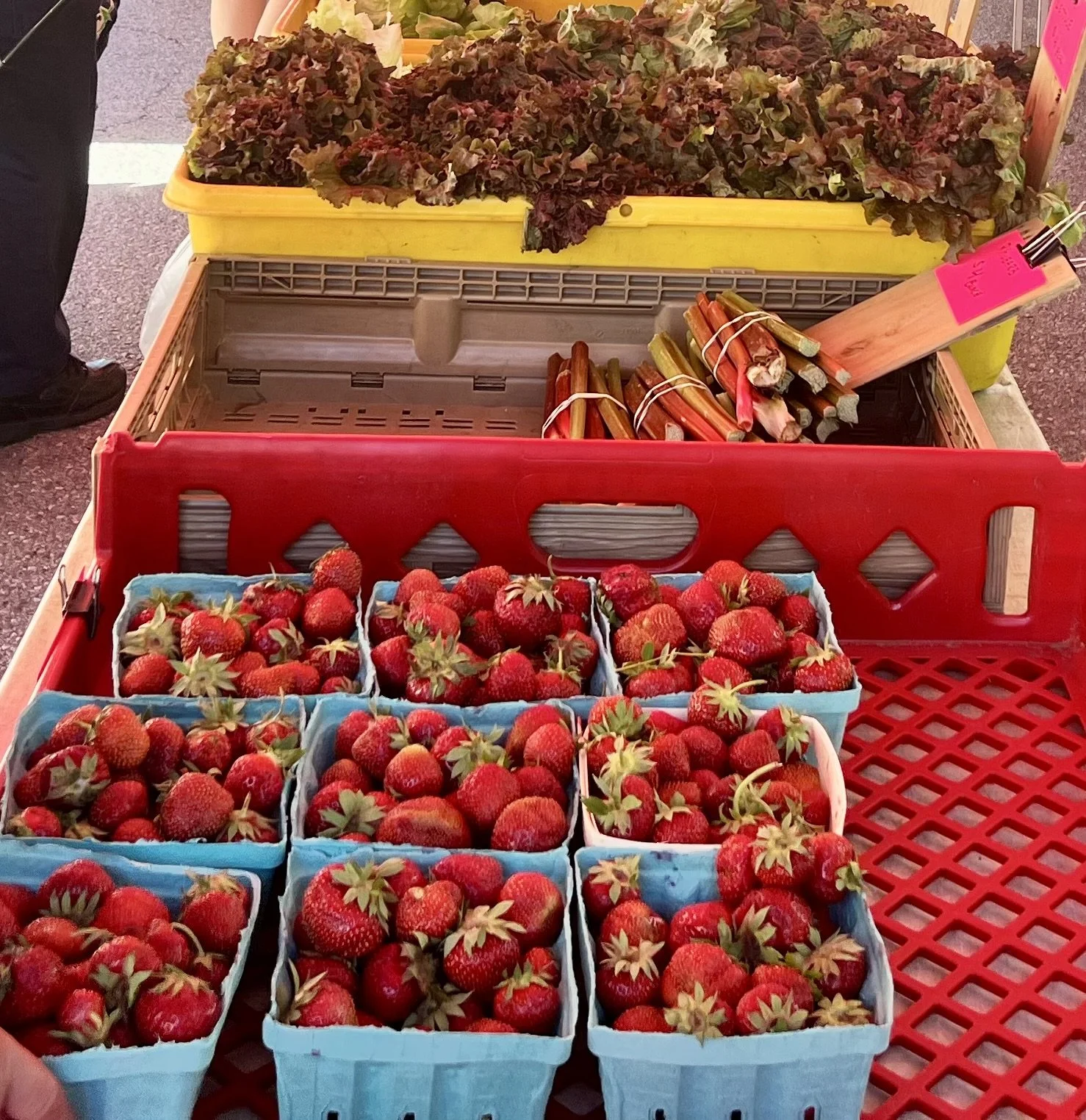
Not every market is the same. While the first few markets I tried had at least four farms and a host of other food vendors (bakers, cheesemongers, breweries, etc.), others tailored more to other local businesses: jewelers, pottery makers, tie-dye t-shirt sellers, local clubs. I don’t disagree with them being there on principle. It’s not why I come, but surely this is what draws a crowd. And just because I work in food doesn’t mean everyone is as passionate about it, or necessarily believes farmers markets to be all about farms.
Even so, the balance can feel a bit off when only two out of seventeen vendors are actually selling fresh produce. I tried not to show my dismay on my face, though I’m not sure I succeeded.
I took my time looking through the options of produce, not because there was that much, more so because there wasn’t. What was I going to cook with tonight? Would I have to make a stop at a supermarket to stock up on something else? Having enjoyed the splendors of the last few markets I’d visited, the produce section of my local supermarket looked extraordinarily bland by comparison. The idea of having to go there had already begun to feel like disloyalty.
And yet, the majority of this town’s market was dedicated to other vendors, decidedly not food vendors, decidedly not local crop growers. What little produce I did see was small by comparison to what I’d seen elsewhere: smaller strawberries, a small bag of lettuce greens, some wilted garden plants.
Though I’d said earlier that I didn’t go into farmers markets necessarily with a recipe in mind, which was true, I secretly hoped there would be garlic scapes available again, more arugula, cherry tomatoes, some fresh garden onions. ‘Do you guys have garlic scapes at your farm?’ I asked the kind lady at one of the farm stands, hoping maybe I could pop by their actual location instead of the supermarket. ‘Oh no ma’am. We’re fresh out from last week!’
But of course! How silly of me to think that, just because a crop was in absolute abundance one week, it would also be there the next.
Farmers markets aren’t just a way to provide local crops. They’re a reminder that we can’t make the world spin the way we want or expect. Farmers and gardeners surely know this (better than I do, apparently), but it bears remembering: food, when it’s grown the right way, locally, in season, has a short lifespan. It’s not available for very long at all.
Lesson learned, I thought, as I purchased my strawberries and walked over to the next farmstand. Another kind lady had even less than the one I’d just visited, but I made an effort to perk up my face. Whatever it was they had, I’d enjoy, I told myself. Perhaps she also lamented the little she had to offer. Perhaps she was also disappointed at how few farmers actually made it out to market that day. ‘Slow day today,’ she said to me (I was the only customer there). ‘Seems it,’ I said, staring at the tiny cucumbers and wondering, do I really want more of these? For that price?
‘Well, we’ll be back soon. Tomatoes are coming in fast and hard!’ I perked up at this, remembering too that just because a market bounty looks small one week isn’t an indicator of what will be there the next.
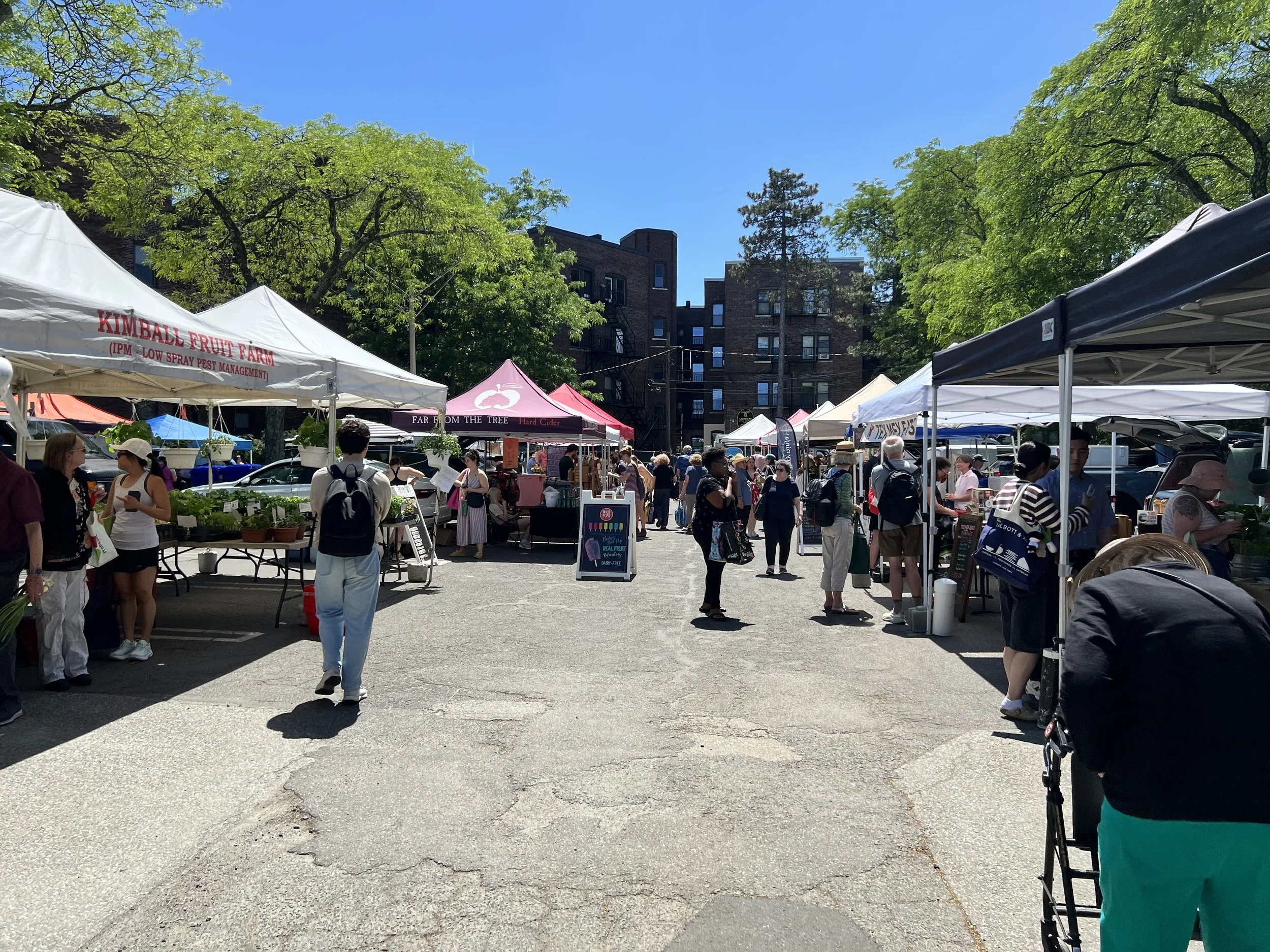
Brookline Farmer’s Market
Living in eastern Massachusetts, I’m lucky to have an abundance of markets nearby, a privilege many people don’t have, even those surrounded by farmland where crops often head straight to large distributors instead of local communities.
Even still, being so used to convenience and abundance everywhere, it’s all too easy to think ‘I’ll just get it elsewhere’, without considering what this means for farmers, what it says about my ‘need’ for a particular vegetable. We’ve become so accustomed to having the majority of the world’s produce available that we forget just how wonderful local produce is, that it’s only good for a short while before something else comes along.
You see, eating local isn’t about convenience at all. It’s about learning to enjoy the things of now, and learning to accept that they won’t always be available when we want them to be. Scarcity makes abundance meaningful. Knowing something won’t last changes how deeply we appreciate it while it’s here.
In the meantime, it’s up to us to figure out how best we use those crops when they do grace our markets. I’m not just talking about cooking with them when they’re fresh. But preserving, making sauces or condiments and storing them for later enjoyment. Gifting them to someone who doesn’t have access to fresh produce and could truly enjoy them more than you might.
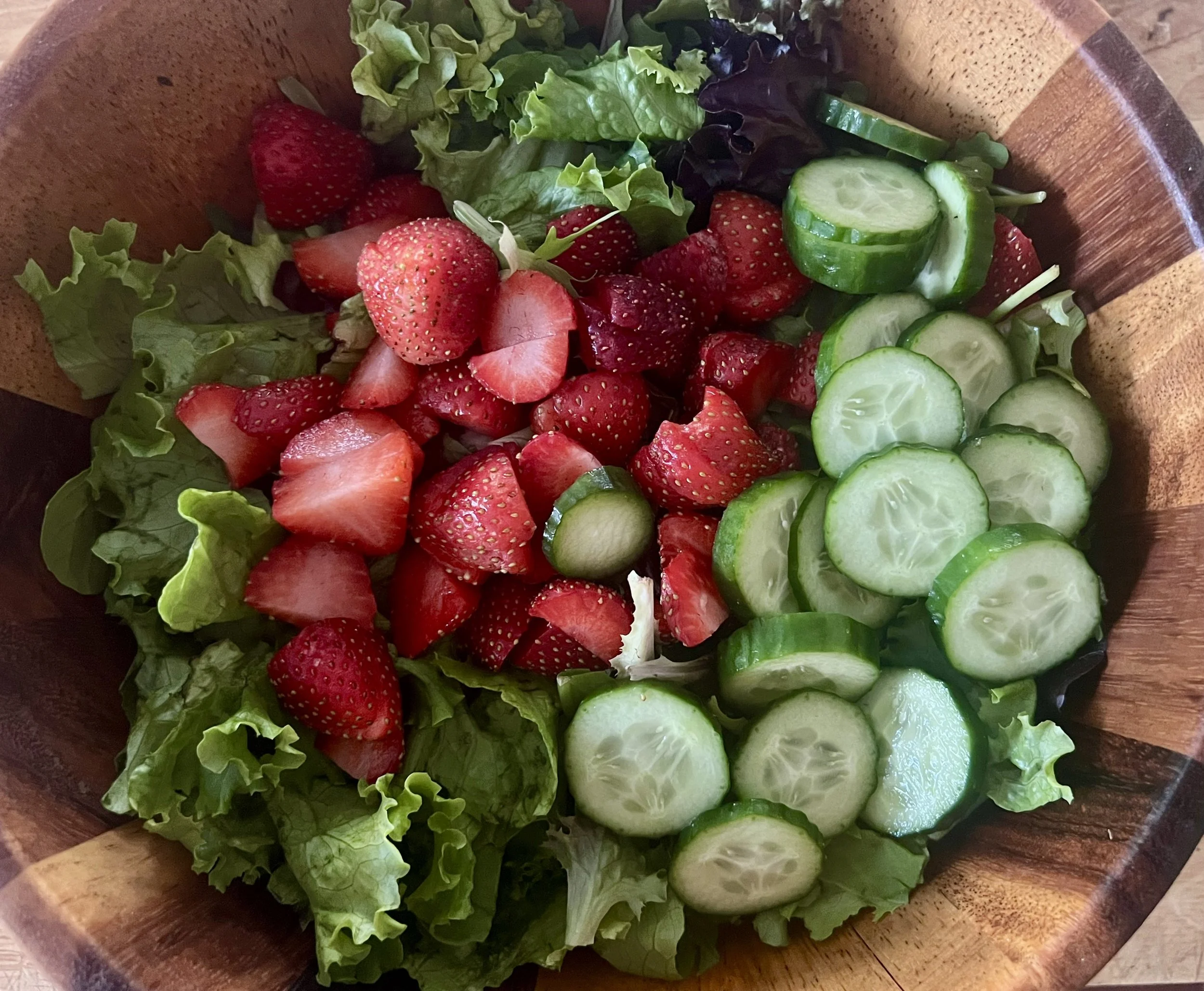
I went home with my green lettuce, some radishes, a smaller amount of strawberries, and (but of course) some cucumbers. It wasn’t nearly the size of the loot I’d brought home a couple weeks ago from a different market. But it was what I had.
That night, we feasted on a salad featuring all these goods and some toasted sliced almonds we had in our pantry. I whipped up a quick balsamic vinaigrette and mixed everything together. As I tasted it, the flavors came together in my mouth so beautifully, the freshness so clear and vibrant, it reminded me of the blessing it is to have even this small amount of the earth’s bounty. In truth, it was more than enough.