What if the Answer to High Grocery Prices was Local?
Let’s face facts for a moment: grocery prices have been rising for a while now, and it doesn’t seem like that’s about to change anytime soon. What at first seemed like a bad case of inflation has become the new normal: steadily rising costs that don’t show signs of slumping off. And this latest oil crisis? It’s only going to make things worse.
You might be tempted to say that rising oil prices have nothing to do with the food on your shelves. Sadly, the food and oil industries, due to the transportation and packaging involved in bringing food to supermarkets, are heavily linked. And any crisis that affects the oil industry tends to affect grocery prices, even if it’s only in cents or dollars.
Raspberries are perhaps the best example. Because raspberries are a particularly delicate fruit requiring firmer packaging, and because they’re usually transported from far away where they were grown, the price has become steep these days, almost double what they were even two months ago.
Very little of the food you see in your supermarket came from a local farm; it was harvested, shipped, packaged, and transported again to a multitude of grocery stores. And we’re paying the price.
So what do we do then? The answer has actually been under our noses all this time.
Farms and Farmer’s Markets
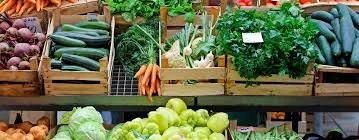
So often we forget exactly how our crops are grown, who grew it, or in what conditions. But going directly to the source is a rewarding journey on its own, despite the transportation costs it may take to get there.
As solutions go, obtaining produce from farms is quite possibly the best solution to rising grocery prices. Organic, locally grown, seasonal produce is right at your fingertips, and being as it is freshly harvested, the taste is much more flavorful than that sold at the grocery store.
In terms of price, farm produce is often competitive even with cheaper grocery brands. For one, no packaging or transportation costs are tacked on. Even more importantly, in purchasing from a farm, you support the hard workers that grew the crops, not large corporations.
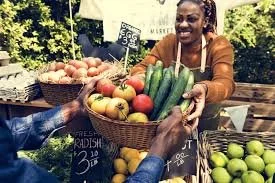
Admittedly, not everyone is able to make it to farms, and most of us aren’t lucky enough to live next to one. That’s why farmer’s markets are the next best thing. The concept of farmer’s markets is the same as farm-to-table: eliminate the transportation, packaging, and marketing, and take the food directly to the people. Only this way, it’s easier for city folk to access it.
Much like getting produce directly from the farm, you’re obtaining natural, organically-grown, more flavorful, and oftentimes cheaper produce than that which you normally find in the supermarket. You’re supporting local farmers or crop growers, helping stimulate your own local economy.
Even as many face uncertain financial futures, there are incentives to purchase from farmer’s markets. Food stamps are a federally supported program, and many farms or farmer’s markets are set up to accept EBT cards. What’s more, many states (though not all) offer systems where those on food stamps get money back by supporting local farms, or double their food stamp allowance by obtaining produce from farmer’s markets.
Community Supported Agriculture
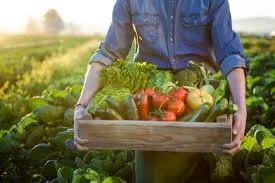
But what about those that have no means of transportation whatsoever? There’s still some things you can do.
All fifty states participate in something that’s called ‘Community Supported Agriculture’, or CSA. This ingenious program is a way for fresh, locally produced crops to come straight to your door. It’s also one of our country’s best kept secrets.
A CSA works by buying a ‘share’ of a local farm’s harvest in advance, receiving local produce from their harvest throughout their growing season. Though subscribers won’t always get a say in the produce they receive, and the success of the model hinges on good growth, CSAs offer a truly ingenious means by which to obtain fresh, locally grown produce without having to drive anywhere.
Though an established system, this marvelous resource is not a dominant one. Though popular in urban or suburban areas near farms, or among those interested in locally sourced produce, outside these circles very few know about CSAs or don’t understand how they work. This lack of knowledge is a significant barrier that accounts for why they currently only make up an estimated 7 - 8% of total direct-to-consumer sales.
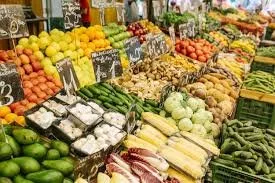
For most of us, doing one or all of these things probably won’t entirely eliminate our need for supermarket products. But that’s not really what matters. It’s about lessening our dependence on them, to find other ways to obtain our food that don’t involve heavy packaging, exorbitant transportation of crops from faraway places.
The need to support locally sourced food has always been the better answer toward a more sustainable future. In these trying times of unrelenting grocery price surges, the time feels especially ripe to finally give local produce the stardom it desesrves.