Bread Baking for Beginners: Tips for Getting Started
Few things on this earth are as wonderful as homemade fresh bread straight from the oven. There’s something almost luxurious about a fluffy, golden-brown loaf, still warm from the oven and perfect enough to eat straight from the pan.
But bread baking remains a niche activity for most of us. Approximately 72% of Americans still purchase their bread products from a store, while roughly 30% bake bread regularly at home. Those who do bake bread sometimes make it seem like a hobby that requires intense focus, patience, and skill to accomplish well.
I’m here to tell you that’s not so! Bread baking is possible for anyone: the busy professional, the beginner, the expert pastry baker who’s just not sure they can actually make bread, or someone who’s tired of supermarket bread and wants to try the real thing for a change. As a lifelong bread baker and appreciator, there are a few things to keep in mind when you start out that can make the process much simpler, and much less intimidating.
Don’t Stress the Timing
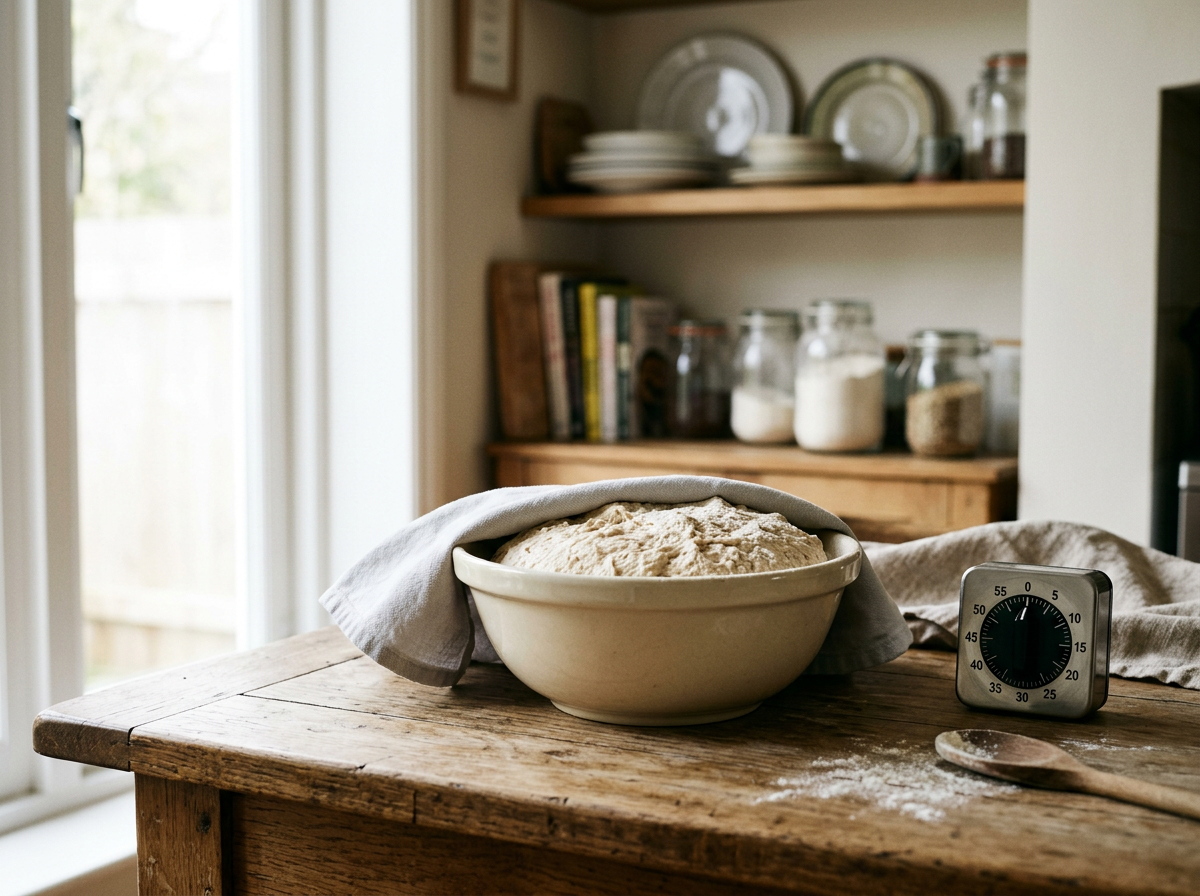
One of the biggest stressors with bread baking is time. Will I even have time to get a dough together before dinner? How long does the dough take to rise really? How can I fit this into my already busy work schedule?
Baking bread, unless it’s a quick bread that doesn’t require yeast, requires preparation. This point in and of itself can shy busy people from trying. When we get in the kitchen, we want convenience and simplicity. Bread baking doesn’t exactly fall into the convenient category.
But here’s the thing: rising times are just guidelines, not hard deadlines. And you can almost always work around them. You can slow the process down or speed it up depending on what works best with your schedule.
If you know you won’t have time to finish your bread in one day, you can complete the initial stages, cover the dough, and place it in the refrigerator for up to 24 hours. When you’re ready to continue, bring it back to room temperature and proceed with the recipe. It’s a simple way to divide the work across two days rather than trying to squeeze everything into one evening.
For ways to accelerate the rising time, see the below segment on temperature.
Temperature Matters
Temperature in baking bread is more important than it might seem at first. A cold kitchen will make it harder for the dough to rise. One that’s too warm can make it rise faster (though sometimes a bit too quickly). Creating a draft-free location for your bread to rise, whether in winter or summer, will provide the most consistent results whatever the season.
In winter, this often means I’ll heat the oven just slightly, turn it off, then cover my dough and place in the oven where it’s just slightly warm. It’s the most draft-free section of my kitchen and produces the best results. This is also a great method if I need my bread to rise faster than the recipe calls for.
Learn to ‘Read’ your Dough
Many traditional yeast breads require kneading before they can rise properly. But knowing when exactly it’s been kneaded enough can be tricky the first few times you do it. As a general rule, unless specified otherwise, your dough should be smooth, move easily with your fingers, and only slightly sticky (but not so much it’s sticking to your board). It should be soft and pillowy, not heavy or bubbly.
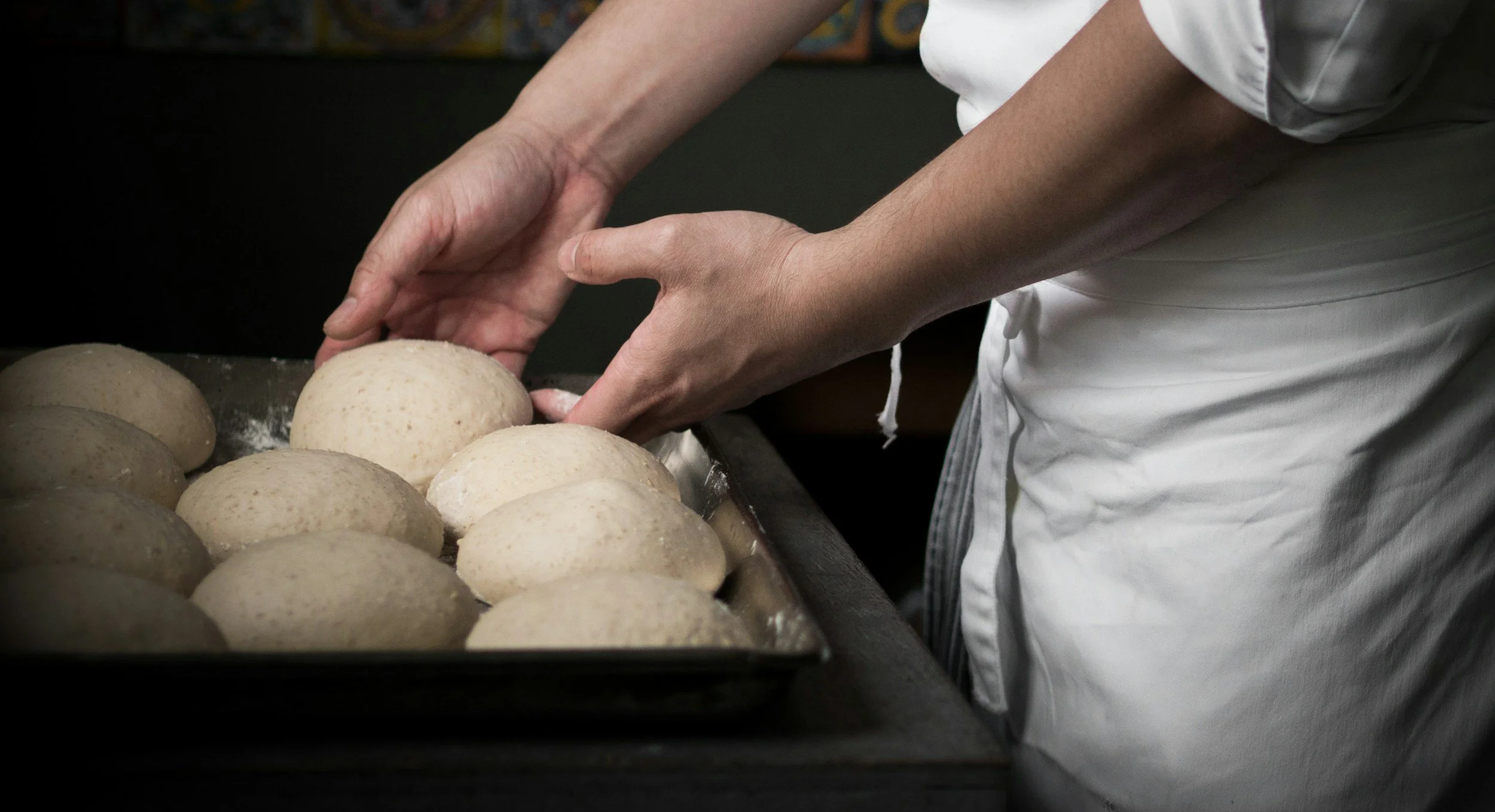
If it feels heavy, then you’ll need to knead the dough more until it starts to stretch without too much effort. If it’s sticking to everything it touches (including your fingers), then that means it needs more flour. But be careful how much you add. Start adding one tablespoon of flour at a time so you don’t overdo it and make the bread too heavy.
Bad Loaves are a Part of Baking Bread
There’s another reason people are intimidated by bread baking: the possibility of failure. A failed loaf feels especially painful when you’ve spent hours working on it.
But your first loaf doesn’t need to be perfect. In fact, it probably won’t be. Maybe the crust will be harder than you wanted. Maybe the loaf won’t rise quite as much as you expected. Maybe you’ll discover that your kitchen is considerably colder than you thought it was. None of this means you can’t bake bread. It means you’re still figuring out all the bits and pieces that make good homemade bread possible.
Bread baking is one of those things that becomes much easier once you stop trying to follow the clock quite so closely and start paying attention to the dough itself. Is it becoming smoother? Is it expanding? Does it feel soft and elastic?
Those observations will ultimately teach you more than memorizing a particular rising time ever will. Over time, you’ll become better at troubleshooting a loaf when something goes wrong, and better at recognizing when a dough simply isn’t going to cooperate.
The goal isn't to make a perfect loaf every time. The goal is to understand what happened well enough to do a little better the next time.
Don’t overcomplicate it
There are more bread recipes out there than there are humans. Some of them call for four ingredients only. Others 20. Some require 30 minutes of rising time. Others an entire day. Some require complex shaping techniques that take 20 minutes to understand. Others, you barely have to knead the dough.
Ultimately, bread baking can be as simple or as complicated as you make it. These four recipes are a good place to start. Each introduces a slightly different element of bread baking without making the process unnecessarily complicated.
NYT No-Knead bread: this one is so simple, it might seem like a trick. The name says it all: you really don’t knead this bread. You just let it sit … for a long time. It requires very little effort, and yet comes out of the oven looking like an artisan loaf every time.
Onion and Herb bread: this recipe introduces the concept of adding other flavors to your dough. Though it’s not considered a quick bread as it incorporates yeast (quick breads are ones that don’t require yeast to rise), it rises very quickly!
Focaccia: Focaccia has the reputation for being difficult to master. This recipe puts those worries to shame. This recipe is also ‘no-knead’, and doesn’t require extensive rising times. What’s more, you can add almost any topping you think would go well: herbs, garlic, roasted cherry tomatoes, etc.
Soft Dinner Rolls: Sally’s Baking Addiction offers a great recipe for dinner rolls that introduces the concept of enriched dough and shaping individual portions. This is perfect for the beginner baker looking to create a fluffy dinner roll that works well with multiple kinds of meals.
Good Resources

There’s also a wide array of helpful books and blogs on bread baking that can help you get started, or take your breads to the next level. Below are my recommendations:
America Test Kitchen’s Bread Illustrated is a marvelous collection of bread recipes ranging from simple, to slightly complicated, to ‘artisan’ level. You’ll learn solid bread baking techniques while also enjoying a diverse collection of breads, both sweet and savory.
James Beard’s Beard on Bread is a classic for a reason. Beard has a way with creating clear instructions that help anyone who’s interested in learning bread baking techniques. The book is full of classic recipes, making it perfect for anyone interested in learning the techniques but also the wide variety of breads available to make.
Bernard Clayton’s New Complete Book of Breads is another classic, and one well worth investing in if you’re interested in all different kinds of breads and bread flours. Much like ATK’s Bread Illustrated, Clayton starts with the simple breads first before getting into more difficult material.
Maurizio Leo’s The Perfect Loaf is one of the most comprehensive guides on sourdough breads out there. Winner of the James Beard award, this book provides all the information you could want on how to create your own starter and produce luscious loaves of sourdough.
For an older, but beloved baking book, there’s Uncle John’s Original Bread Book, a classic from 1975 written by John Rahn Braué, himself a descendent of German master bakers. (For more on German bread baking, read A Culture Built on Crust). His collection of recipes spans quick breads, yeast breads, sourdoughs, and sweet breads. And though the book is considerably older than the others offered here, his advice is timeless. What makes his book so cherished, however, are the numerous quotations scattered throughout, both from others as well as his own: ‘Justifying a fault doubles it’, ‘Serve with quietness, unselfishness, and cheerfulness’, and my personal favorite ‘Now, Johann, knead yust vunsz moah!’.