A Culture Built on Crust
There are few things as divine as that of freshly baked bread. The very aroma of it is something splendid, the promise of something warm, soft, and comforting.
It’s hard not to associate bread with German cuisine. Some of Germany’s most beloved foods are breads or bread-like concoctions (i.e. beer). Travel anywhere in a German-speaking country and you’re bound to find bakeries full of every bread imaginable. Much like cafés here, bakeries are not only a place to purchase bread and pastries, but also to gather and meet with friends. Bread is the central component of breakfast and dinner, the ingredient everything else is centered around. And it certainly still has a presence during the hot meal of the day, lunch.
But increasingly, I’ve started to wonder what made the Germans so obsessed with bread to begin with? When did they first learn to create it, and what makes it such a crucial part of their culture now?
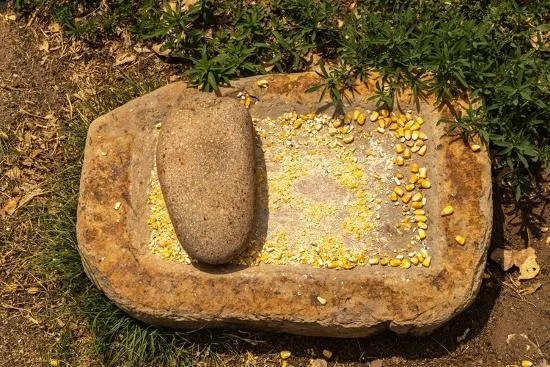
Metate stone used to grind grain. Image from Art.com
Germanic Tribes and Grain
Much of what made bread so important for the early Germanic tribes were the ingredients they had available to them. The grains emmer, einkorn, and rye grew well in the cold and wet land of central, northern Europe. In the earliest times of unleavened bread, they would grind the grains using rocks, mix this with water, and bake on a hot stone (not entirely unlike how Norwegian lefse was first made).
It’s unclear whether Germans cultivated beer or bread first, but they both came about the same way: fermentation. Though the concept of sourdough didn’t originate among the German tribes (the process likely started in Egypt or in the Fertile Crescent), it became the principle means by which early Germans made bread. Rye sourdough was particularly popular. Rye being a dense grain, fermentation gave it the rise and unique flavor that makes ‘Saurteig’ such a staple, and a much beloved bread even today.
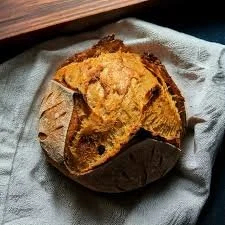
Rye Sourdough bread
The making of an artform
In the early centuries AD, the water mill finally arrived in the German territories, becoming more widespread in the 7th and 8th centuries. This drastically facilitated the grain grinding process, making fine flours more widely available. And with the passage of time came easier access to other flour varieties: spelt, buckwheat, millet, barley, legume flours, etc. Bread making soon became a means of economic prosperity, commercial baking, and variety.
This variety in bread played a crucial role in German culture. The land we consider Germany today was divided into regions, rooted in Germanic tribal territories (principally Saxony, Bavaria, Franconia, Swabia, and Lotharingia) and later into 25 states. Though the German peoples spoke the same language (albeit with some variations) and were referred to collectively as the German provinces, each region had its own customs, and more importantly, its own foods.
Each province had their particular way of creating sausage (wurst), their own beer, and of course, their unique breads. By the Middle Ages, with access to a wide range of flours and other ingredients, bread-making had become an artform. Bread makers learned precision, technique, and creative flourishes to give their region’s breads the particular shape and flavor that made them unique. Bread wasn’t simply food; it was a personality statement, a means of expressing history and cultural pride.
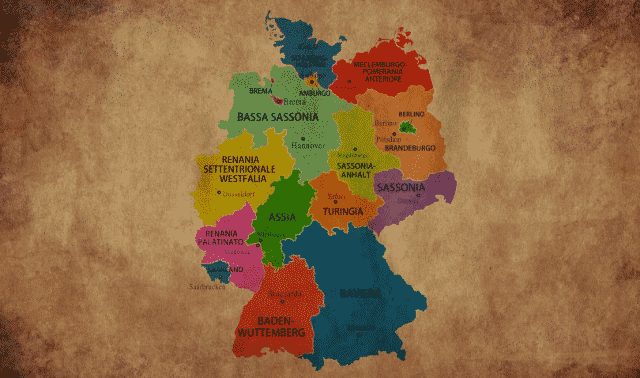
A map of old German states
The concept of bread apprenticeships (‘Bäckerlehre’) also began in the Middle Ages. Pupils would live and learn with a master baker over the course of several years, working for their own food and shelter. The title of ‘Meister’ was a coveted one, and a concept that endures even to this day. Becoming a bread master was much like becoming a world-renowned artist; the title came with prestige, honor, and reverence.
Because bread had become such a crucial food, both economically and culturally, its cultivation became paramount in German culture throughout the centuries. With new ingredients from the New World and elsewhere, the variation in German breads only increased.
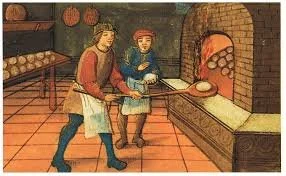
Medieval Baker and Apprentice. Image from World History Encyclopedia.
The introduction of yeast and the future of German bread
Yeast wasn’t entirely absent from German bakers. Brewers’ yeast, the same kind that would later be used to create nutritional yeast, had been used for centuries. And yet, it wasn’t until the early 19th century when yeast was used for bread-making. Much like the water mill had done, yeast revolutionized breadmaking to be faster, more consistent, and more reliable. The breads became lighter, and even more commercially available than they already were.
And since then, technology has only improved the breadmaking process. The German company MIWE creates innovations to make breadmaking into a science as well as an art. Modern bread masters use both new techniques and ancient ones.
Today, German breads are a mixture of all sorts of flours, grains, and sugars. The German Bread Institute has counted 3,232 bread varieties, making Germany one of the richest places in the world for delectable rolls, buns, and loaves. Recipes are passed down from generations, keeping traditions alive, while still allowing for innovations and new ingredients.
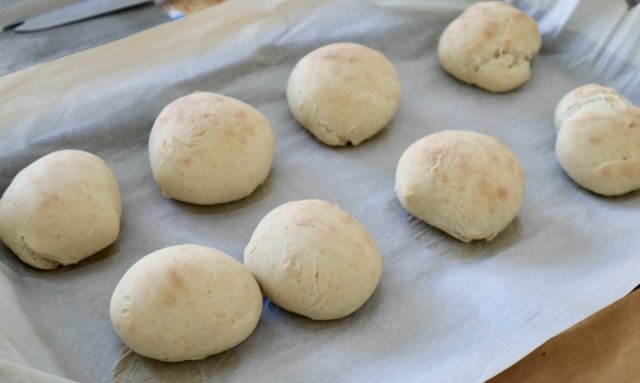
Author’s image of homemade milk rolls.
More importantly though, Germans have given the world a love for bread that’s passed down generations. Even as German-Americans, my family has made bread-making a centerpiece of our family traditions. Despite the convenience of pre-sliced, ready-made bread at the supermarket, my dad made sure there was always fresh, homemade sandwich bread available for our school lunches (even if it meant staying up late to knead dough or feed the starter). There’s something immeasurably satisfying in enjoying, or baking, a homemade loaf.
And no matter how busy I get, no matter the season, I always find a reason to bake some myself. Doing so not only feels like a way to connect with my German culture; it makes my life so much fuller.