Spargelzeit: Why Germany Waits for Asparagus
From the latter part of April until the precise date of June 24th, Germans celebrate asparagus. Their term for it, “Spargelzeit”, translates to "asparagus time”. And while you wouldn’t be entirely wrong in thinking this simply refers to when asparagus is in season, it also means much more to the German people.
Spargelzeit encompasses a deep love and appreciation for the vegetable asparagus. Approximately one-fifth of Germany’s arable land mass is currently used for growing it, making it the largest asparagus producer in the European Union. Despite producing upwards of 100.000 tonnes, Germans still request more asparagus from nearby countries, consuming 125.000 of asparagus each Spargelzeit (achieving 2nd place for the biggest consumers in the world after Switzerland).
Their names for asparagus range from "king of the vegetables" to "noble vegetable" to "edible ivory" and finally "white gold". Certain regions even designate an asparagus queen.
All of this begs the question: how is it that one single vegetable can mean so much to one particular group of people?
A Brief History of Asparagus in Germany
Asparagus has been around for millennia. The Greeks, Egyptians, and Romans grew it, and it was the Romans who undoubtedly brought the vegetable to the Germanic tribes 2,000 years ago. Perhaps because of its shape or the tenderness of the tips, the plant was thought to be an aphrodisiac, a claim modern science doesn’t support.
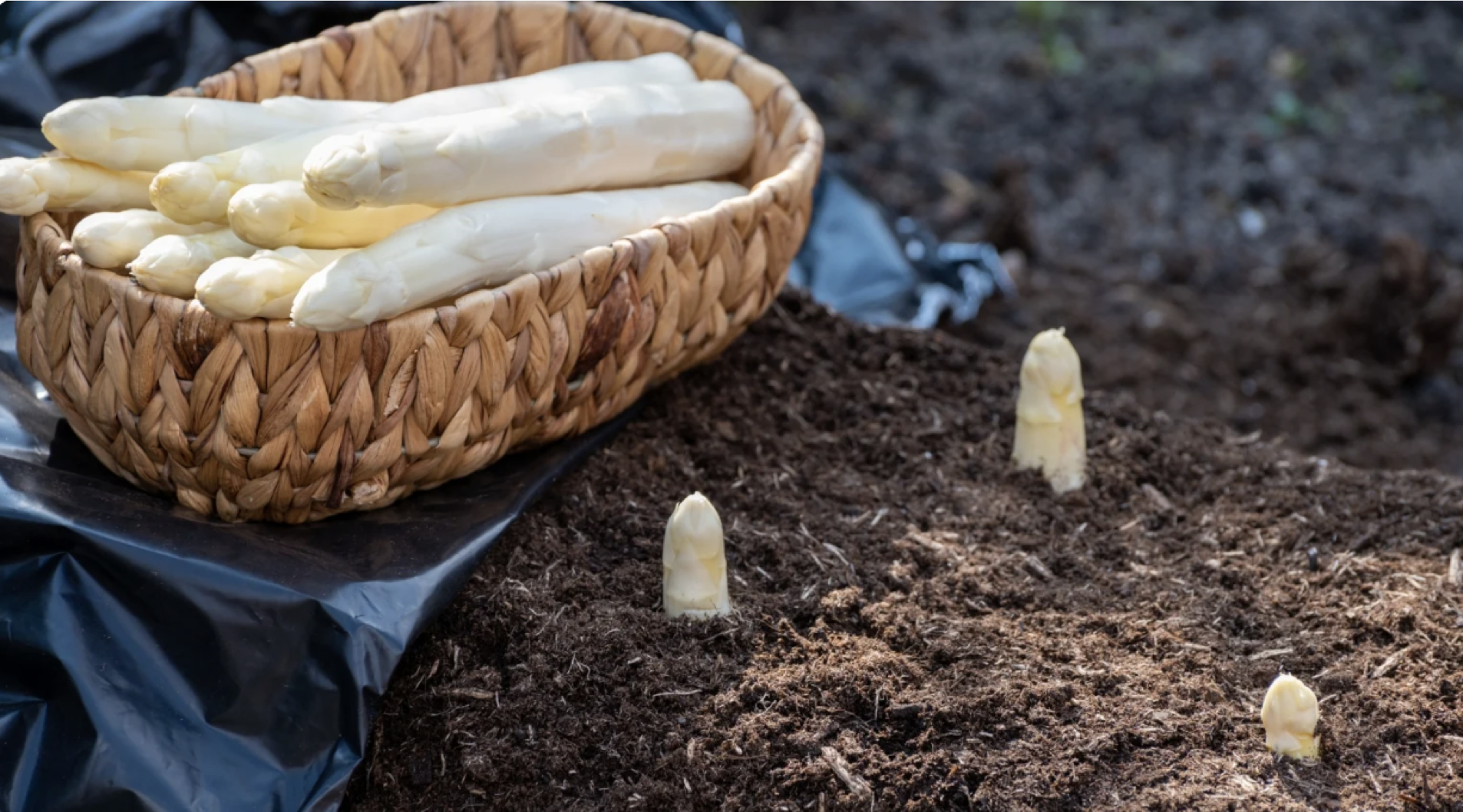
The first German recording of asparagus cultivation comes from 1686 in Stuttgart. This was also when they discovered how to cultivate white asparagus, likely the result of accidentally preventing sunlight from reaching the stalks. While green asparagus grows above-ground, taking three years before it’s able to be harvested, white asparagus is grown under piles of dirt called "hillings". The lack of sunlight prevents chlorophyll build up, making the vegetable white as a result. (Another fun fact: purple asparagus, a favorite in France, is cultivated the same way, only the purple comes from the tips of the asparagus catching sunlight).
The rigorous cultivation technique involved in asparagus production made it a food for royalty and the elite. It wouldn’t be until the nineteenth century however, when refined cultivation techniques, large-scale agricultural improvements, and the expansion of commercial farming made asparagus more readily available for everyone.
The Delicacy that is White Asparagus
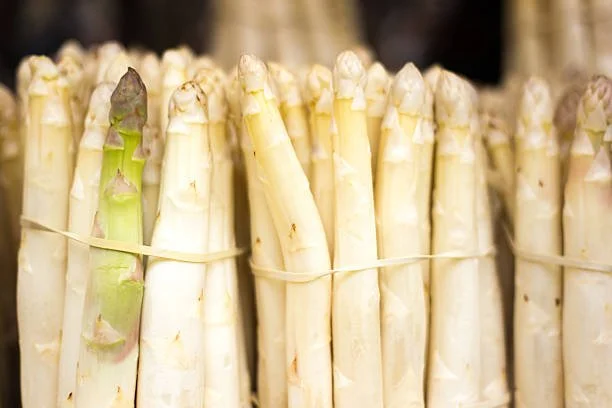
Part of what makes Spargelzeit so unique is white asparagus. Google Spargelzeit and most of what you’ll find features the white version of the vegetable. And given its unique cultivation technique and its exceptionally short shelf life, it makes sense why it’s predominantly still a German phenomenon. (Although some U.S. specialty markets will have it out for a short while in the spring).
The lack of sunlight significantly changes the flavor and texture profile of the asparagus plant. Green asparagus can be tough and usually tastes slightly bitter. White asparagus, at least after the stalks have been peeled, is less bitter, nutty, and considerably more tender. Others also note it has an earthy taste, very mildly sweet.
It says much about the Germans’ love for asparagus that the majority of their Spargelzeit dishes are rather simple, designed to highlight the natural flavor of the asparagus itself. Of course, that doesn’t stop them from heaping butter or hollandaise sauce on top, but asparagus is still the highlight. It’s not tucked into a salad, or mixed into something else that steals the show. Asparagus is meant to be featured.
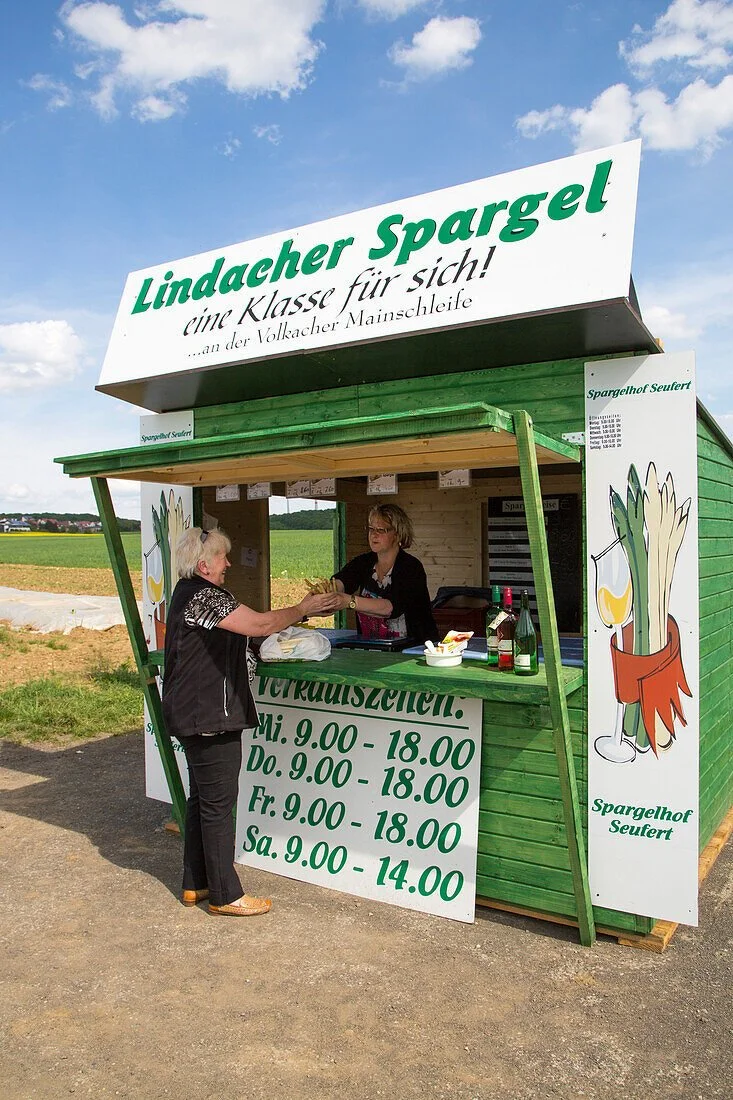
A ‘Spargel’ stand
That perhaps also explains why obtaining fresh asparagus is so key. Although roughly 90% of produce in Germany is bought at supermarkets, white asparagus is an exception. Because of its short shelf life, white asparagus is one vegetable Germans purchase locally, and in abundance. Thousands of roadside stalls or market booths offer white asparagus throughout the season, a friendly nudge that white gold season is here to be celebrated.
Yes, but Why?
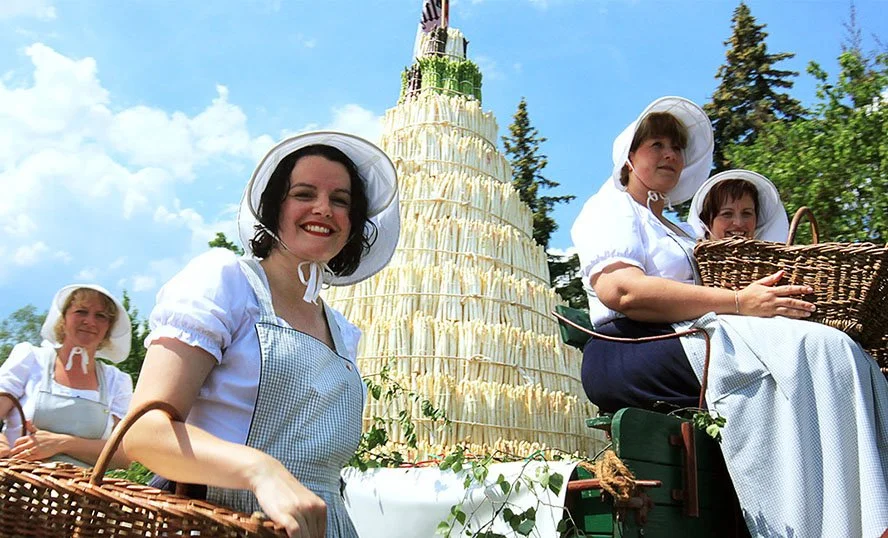
A German ‘Spargelfest’ or ‘Asparagus party’
Despite all these facts, the principal question still remains: why is asparagus so important to Germans?
It’s tempting to chalk it up to the food itself: the delicate flavor, the tradition of pairing it with butter or hollandaise, the simple pleasure of a well-prepared meal. And certainly, that’s part of it. But it doesn’t fully explain the anticipation, the near-reverence, the way an entire country seems to shift its attention, however briefly, toward a single vegetable.
What makes Spargelzeit meaningful isn’t just asparagus. It’s the ritual around it. For a few short weeks, everyone is waiting for the same thing. Roadside stands appear, restaurant menus transform, and meals become a quiet celebration of something fleeting. There’s a shared understanding that this moment won’t last, and that’s precisely the point.
In a world where nearly everything is available all the time, Spargelzeit offers a rare kind of limit. You can’t rush it, and you can’t extend it. You simply have to wait, and then enjoy it while it’s here.
And maybe that’s what gives asparagus its weight in Germany. Not just its taste, but its timing. Not just the vegetable itself, but the collective pause it creates: a brief, seasonal reminder that some of the best things aren’t meant to be permanent.
It may seem strange that something so simple can carry so much meaning. But perhaps that’s exactly why it does.