The Spanish Olive: a Taste of History, Culture, and Tradition
Traveling by train on the Iberian peninsula, you’ll be blessed with a landscape of olive trees. They seem to be everywhere, no matter what part of Spain you’re traveling through: the north, the northeast, the south, etc. Their lollipop shape and sage leaves are distinctive from the other dry brushes and otherwise arid landscape. Dotted on hills, planted in rows, or spread out among rocky terrains, they’re impossible to miss.
The olive trees were something I remembered from the last time I’d been in Spain, over a decade ago. So distinctive are they as a feature of the Spanish landscape, it was hard not to fall back in love with them as I gazed at them once more.
But what exactly is the ‘Spanish olive’? Olives, and the olive oil they produce, are such a crucial feature of the Mediterranean diet. And yet, they vary in size, taste, and flavor depending on where and how they grow. How does the Spanish olive distinguish itself from all the rest?
Aceitunas: The Olive Tapa
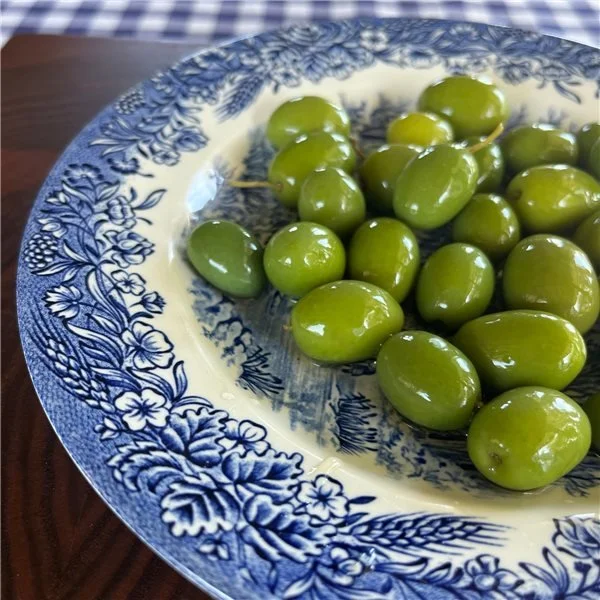
Campo Real aceitunas
Olives are one of those things you’ll often find waiting for you at the table in Spain, served as a complimentary tapa (called aceitunas in Spanish) before you’ve even had a chance to look at the menu. In Madrid, though, I wasn’t exactly thrilled to see them. You see, as much as I love looking at olive trees, I’m a Kalamata olive girl, and the ones brought to our table on our first night of dining in Madrid just didn’t do it for me. Thin and mildly flavored, they lacked the juicy, almost meaty goodness I associate with the olives of Greece.
Had they not continued to appear at nearly every table we dined at, we might have left it at that. But there they were, again and again. And being bred with Midwestern manners, I wasn’t about to leave perfectly good food on the table just because I wasn’t particularly keen on eating it.
And that’s when things started to get interesting.
I knew that not every olive would taste exactly the same, of course. But as we continued to sample them, I began to notice just how much they could differ. At first glance, they all looked pretty much alike (I certainly couldn’t tell one variety from another), but the flavors and textures were another story. Some were juicier, a little more bitter, maybe just slightly fleshier. Others had been brined, while some looked as though they’d just been picked from the tree. Slowly, I began to realize that perhaps I’d been a little too quick to dismiss the Spanish olive.
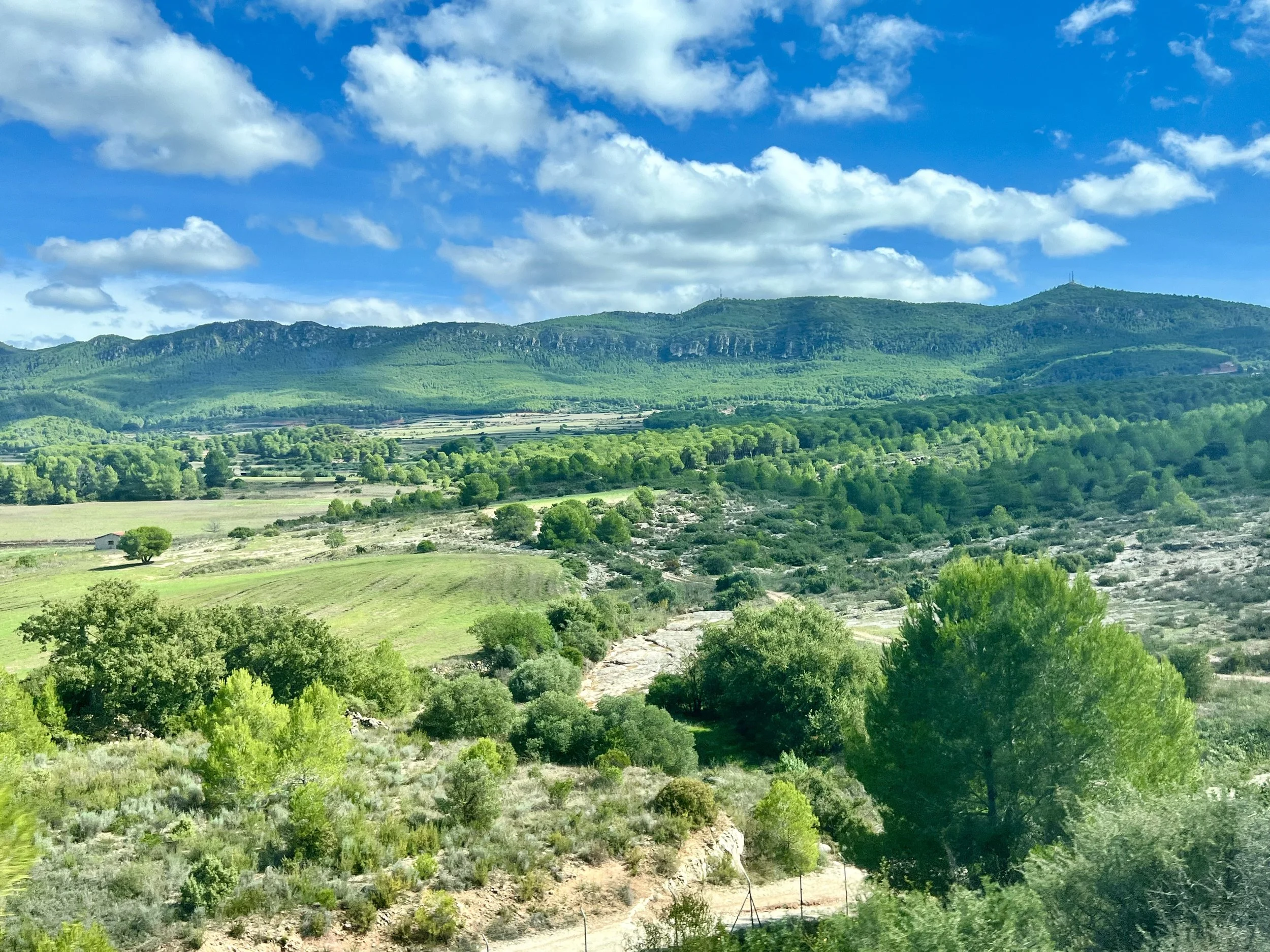
Scattered Olive trees throughout Montblanc in Catalonia, Spain
Leaving central Spain for Catalonia, the olive trees still seemed much the same, though the landscape grew greener the closer we got to Barcelona. That night brought another festival of tapas, and with it, a fresh bowl of olives. These were greener, plumper, and slightly sweet, a refreshing change from the milder-tasting olives of our Madrid days. They also seemed more delicate, almost as though they could fall apart between your fingers.
By now, I was beginning to suspect that there was no such thing as a singular “Spanish olive.” Aceitunas (in Spanish, olivos refers to the olive tree, while aceitunas refers to the olives served at the table) seemed to vary considerably from one region to the next, each with its own flavors, textures, and characteristics. But why? What was behind all this variation?
Our journey south to Andalusia brought yet another assortment of Spanish olives to sample. I remembered from my history class at the Universidad de Sevilla several years ago that the majority of Spain’s olives are grown and cultivated in Andalusia. This was almost unbelievable, considering how many olive trees we’d already seen in the north. And yet, there they were, stretching across the landscape, a reminder of just how deeply rooted olive cultivation is in this part of Spain.
By this point, I’d gone from politely accepting the complimentary olives at our table to actively wanting to try them. Some restaurants continued to serve them as a tapa on the house, while at others, I was more than happy to order a bowl myself. And the variety kept coming. In Andalusia, you’re more likely to encounter larger olives, some stuffed with pimento peppers, offering an entirely different experience from the smaller, more delicate ones we’d tasted farther north.
Somewhere along the way, what had initially seemed like a boring, almost redundant tapa had become one of the more exciting things to sample on our travels. Who knew there could be so much variation in something as seemingly simple as an olive? And more importantly, why?
There was history here, a story behind these little fruits that I wanted to know more about. Because the story of Spain’s olives goes back much further than my first encounter with them in Madrid.
The olive tree on the Iberian peninsula
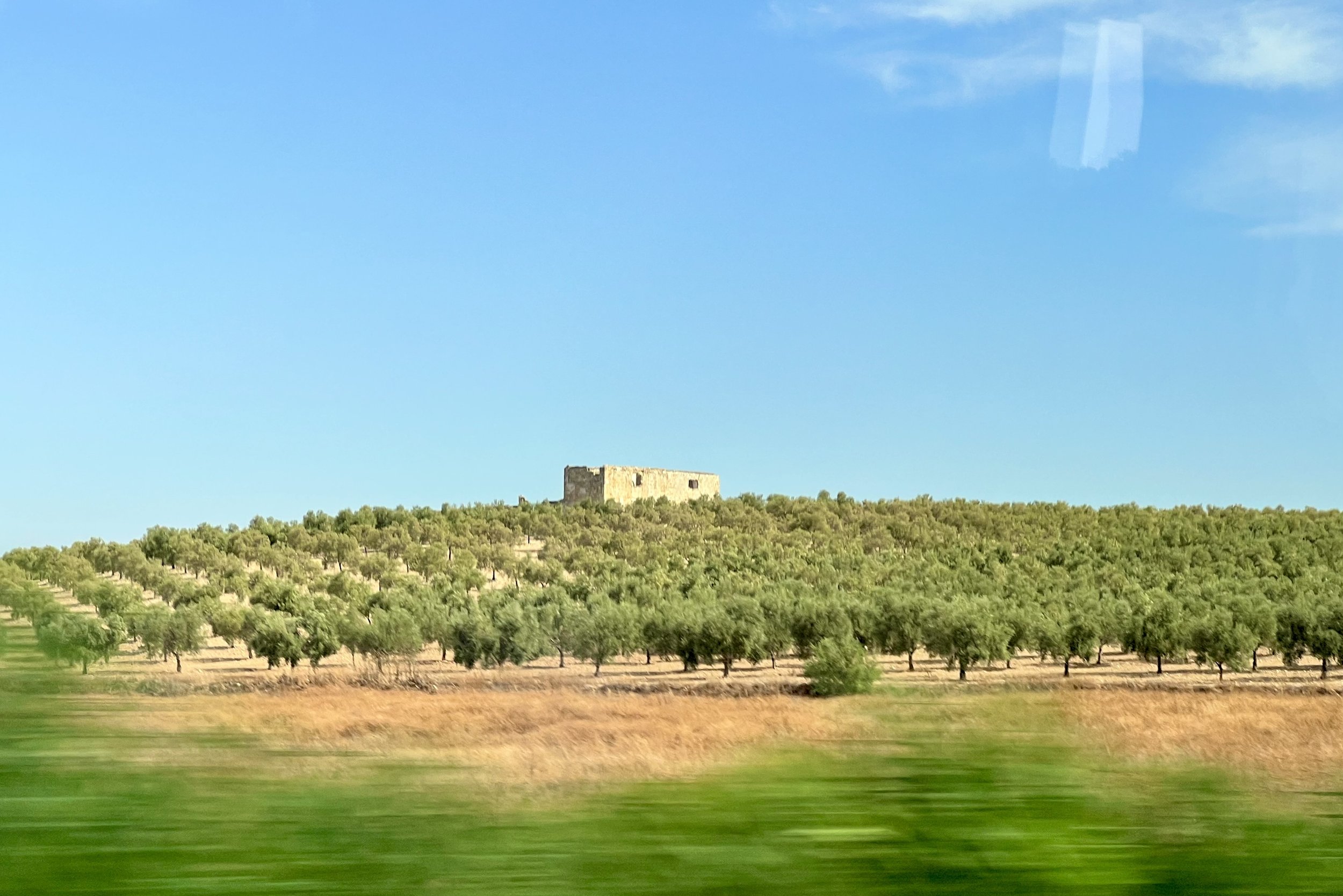
Olive trees growing along the Spanish countryside
It goes without saying that the Mediterranean climate is particularly well suited to growing olives: hot, dry, long summers followed by mild winters. Olive trees also thrive in rocky, sandy, or calcareous soils, all of which characterize much of the Mediterranean terrain. In other words, the conditions for growing olives in Spain were practically ideal.
Certain wild olive trees, known as acebuches, were native to parts of Andalusia even before olive cultivation began. But the Phoenicians are largely credited with bringing cultivated olive trees to the Iberian Peninsula as far back as 1100 BCE. From then on, the various peoples who settled on or ruled parts of the peninsula would cultivate olives, each contributing to the development of the industry in their own way.
The Tartessians and Iberians cultivated olives, while Greek settlers grew them in the various colonies that dotted the Mediterranean coast. Then came the Romans, who arrived in Iberia in 218 BCE and transformed the region into a major supplier of olive oil for Rome. In fact, olive oil became such an important export that it helped fuel a thriving trade between the peninsula and the rest of the Roman Empire.
Later, the Arab and Moorish settlers who arrived in 711 CE brought new agricultural knowledge and irrigation techniques that helped expand cultivation. They also contributed to the development of farming practices that would allow olive growing to flourish across parts of the peninsula.
Whoever ruled the Iberian Peninsula, or parts of it, seemed to recognize the same thing: olive trees were a valuable source of food and oil, and the terrain was particularly well suited to their cultivation. Olives weren't simply another crop to grow. They were a resource that could sustain communities, support trade, and contribute to the prosperity of entire regions.
But the importance of olives ran deeper than that. Olives and olive oil weren't just used for eating. Olive oil served a variety of purposes in everyday life, from lighting lamps to making soaps and cosmetics. It was also used in traditional remedies and for cleansing the body. In a world where so much depended on what the land could provide, the olive tree was remarkably versatile, offering far more than just something to eat.
And that relationship with the olive tree has endured for thousands of years.
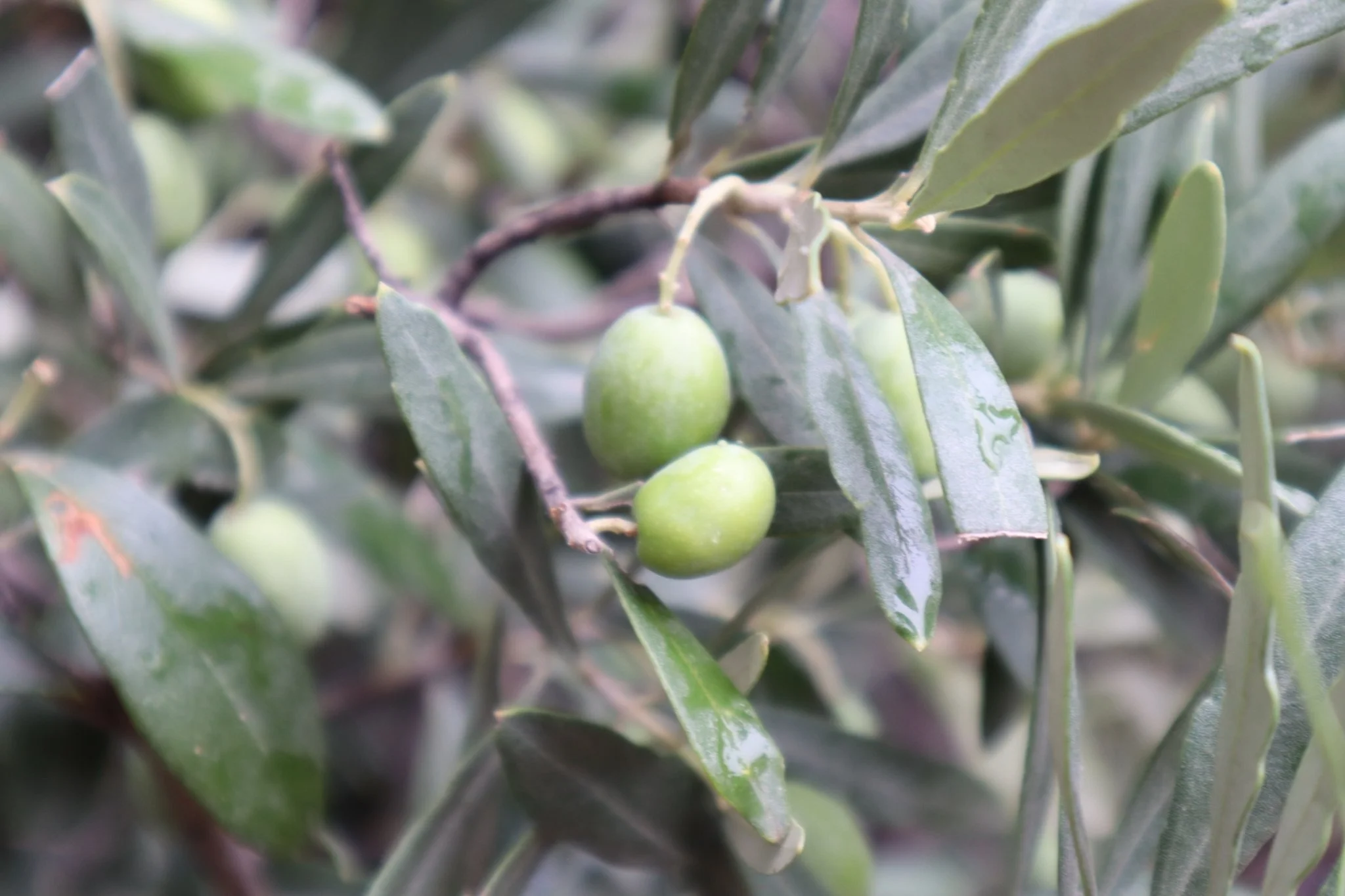
Today, Spain is the world's leading olive oil producer, accounting for roughly 30–50% of global production, depending on the harvest. There are hundreds of millions of olive trees across the country, with about 268 cultivated varieties. Much of Spain's olive production remains concentrated in Andalusia, the southernmost region we visited on our travels.
Standing among the olive trees in Spain, it's easy to appreciate their beauty. But knowing a little more about their history makes it easier to understand why they're so deeply woven into the landscape, the culture, and the food. And perhaps that's part of what made those little bowls of aceitunas so much more interesting to me: each olive was a small taste of a tradition that had been thousands of years in the making.
Of course, not all olives were grown for the same purpose. Historically, the vast majority of Spain’s olive harvest was destined for oil production, which became an important export as early as Roman times. But certain varieties were prized specifically for eating. The Manzanilla de Sevilla, for example, became one of the most widely recognized table olives in the world, while the enormous Gordal Sevillana was valued for its size and generous amount of flesh. Other varieties, like Hojiblanca, could be used for both olive oil and the table. Over time, farmers selected and cultivated varieties suited to their local climate, soil, and intended use, helping create the remarkable diversity of Spanish olives we see today.
The top varieties of Spanish olives today
If you travel around Spain today, you’ll find a wide array of olives, much like we did on our recent journey. And just as the landscape changes from one region to the next, so do the olives themselves. Here are some of the most well-known varieties you might encounter along the way.
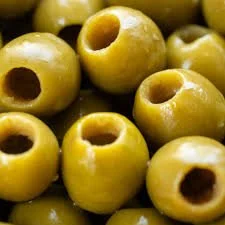
Manzanilla olives
Manzanilla: Meaning “little apple” in Spanish, the Manzanilla is one of Spain’s best-known table olives. Grown primarily around Seville, it’s also widely distributed internationally and is likely the variety many Americans recognize as the classic “Spanish olive.” Plump and round, Manzanillas have a pleasantly nutty flavor that makes them just as enjoyable on their own as they are stuffed or served alongside tapas.
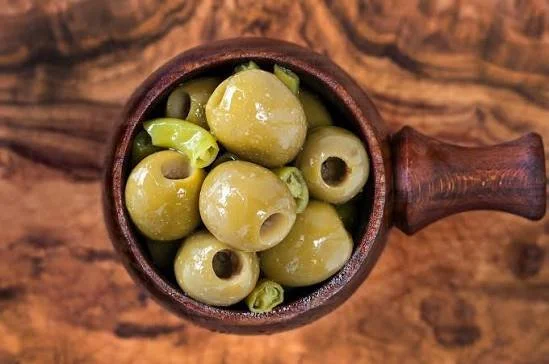
Pitted Gordal Olives
Gordal: Another Andalusian favorite, the Gordal is hard to miss. Sometimes called the “fat olive” because of its impressive size (‘gordo’ means fat in Spanish), this variety has plenty of flesh, making it particularly well suited to stuffing. You’ll often find Gordal olives served as part of a tapas spread, where their size and satisfying bite make them a standout.
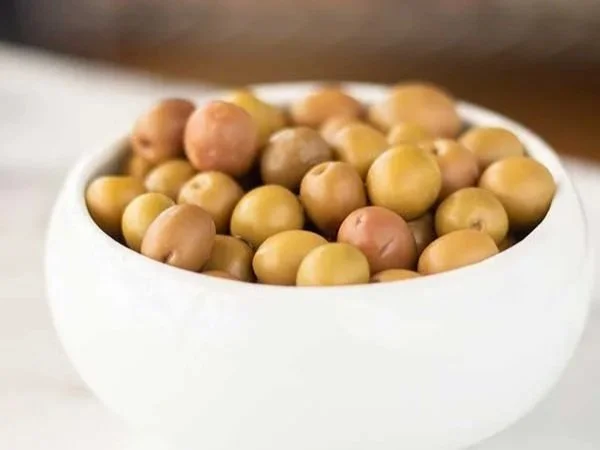
Arbequina olives - image from Caputo’s market
Arbequina: Heading northeast to Catalonia, you’ll find the Arbequina, a variety native to the region. These little olives are particularly well known for their use in olive oil production, yielding an oil with a delicate, fruity character and hints of sweetness. Compared with some of the larger Spanish varieties, Arbequinas are small and relatively delicate, with a flavor profile that can be quite different from the olives you might encounter farther south.
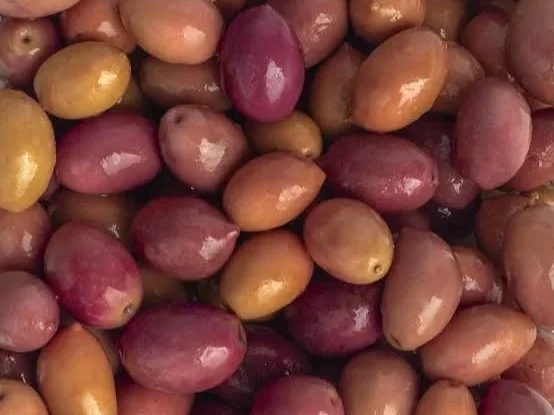
Cornicabra olives
Cornicabra: In central Spain, particularly around Toledo and Ciudad Real in Castilla-La Mancha, the Cornicabra is an important olive variety. Its name means “goat's horn,” a reference to the distinctive, curved shape of the fruit. Unlike the Manzanilla, which is primarily known as a table olive, Cornicabra is grown mainly for its robust, peppery olive oil, with a characteristic bitterness and astringency. Another variety you may encounter in central Spain is the Campo Real olive, a traditional table olive known for its distinctive preparation and seasoning.
The ‘Spanish olive’ in America
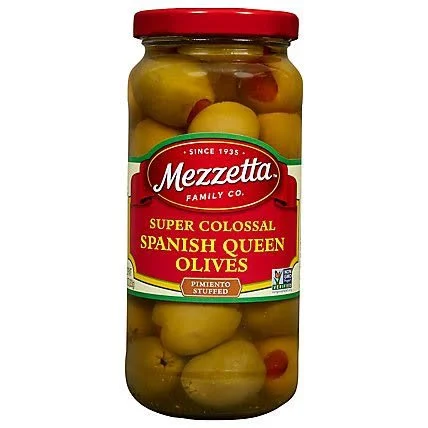
There’s a reason most Americans assume there’s just one variety of olive in America: that’s how it’s marketed. Many of us can distinguish between a castelvetrano olive and a kalamata olive. Spanish olives, in contrast, are generally sold in jars, plump, and filled with pimento peppers. The Goya brand offers this in most grocery stores, where many purchase them as something to garnish a martini.
But where can you find other varieties of Spanish olives in the U.S.?
Alas, the variety of Spanish olives is something difficult to enjoy in America, unless you stumble upon a specialty grocery mart that happens to stock them. They can also be purchased online via stores like La Tienda, where they’d make a great gift for someone special.
But the truth is, Spanish olives are best enjoyed in their homeland, where you can experience the variety firsthand, alongside the people and food traditions that have shaped them. After all, I arrived in Spain thinking I knew what a Spanish olive was. I left realizing that one little bowl of aceitunas could tell a much bigger story about the place it came from.