The Rise and Fall of ‘Plant-Based’
Words are never just words. They tell us who we are, what we value, and occasionally, where we’re headed.
As a linguist by training, I’ve always been fascinated by the words we choose, the communities that adopt them, and the reasons certain phrases catch on while others disappear. We coin new words because they fill a need, because they describe something we couldn’t name before, or because they become tied in with our identities.
But what happens when a word stops being useful? What happens when its meaning shifts so dramatically that it no longer says what we think it does?
Few words offer a better case study than ‘plant-based’. Coined in the 1980s, the term has undergone a remarkable linguistic evolution: from a description of a way of eating to a marketing tool, a social identity, and, increasingly, a word whose meaning depends entirely on who is saying it.
The story of ‘plant-based’ as a term isn’t just about food. It’s about language, and the role it plays in shaping how we think.
Semantic Shifting
We can credit the term ‘plant-based’ to Dr. T. Colin Campbell, a nutritional biochemist who used it in his 1980 book The China Project, a book composed of the results of ten years’ study on nutrition in rural China. What he meant by the term is far removed from how we think of it today: a diet based on whole foods, high in plants, with minimal meat or animal fats.

Dr. Colin T. Campbell
Many proved confused by his choice of words. Campbell would later clarify that his diet was decidedly not plant-only (which was how others interpreted it), but rather based on whole foods, arguing that many foods labeled as vegan are actually highly processed, and would therefore not meet the standards of this diet.
But the public had already reinterpreted the term ‘plant-based’ to mean a diet based entirely on plants. It was semantic shifting at its finest; taking a term that had a larger meaning and making it mean something else. It wouldn’t be long before marketing accelerated this reinterpretation.
It’s all in the marketing
The early 2010s was an exciting period for food marketers. Meat alternatives were about to enter the marketplace. Non-dairy cheese and butters were taking off.
But products need to be marketed before they reach a grocery store shelf, or attract the audience they were geared towards. Over the course of its lifetime, the word ‘vegan’ accumulated cultural meanings that extended far beyond diet. Depending on the audience, it can evoke ideas of restriction, moral purity, activism, or judgment. Whether or not these perceptions are fair is almost beside the point; from a marketing perspective, they influence how consumers react to the label.
What was more, plant-based food producers wanted their food to attract a wider audience than the small sliver of people who declared themselves vegans. Impossible and Beyond Meats especially both created their products with non-vegans in mind. Adding ‘vegan’ to the label would ward away the very people they wanted to reach: meat-lovers, or those who love meat, but might be interested in a sustainable alternative.
This is where ‘plant-based’ became a fresh alternative. It described vegan food in a way that customers could find palatable. Suddenly, the product could be marketed as fresh, healthy, and natural. It was inclusive, positive, unrestrictive. The conversation shifted from what was missed to what was included.
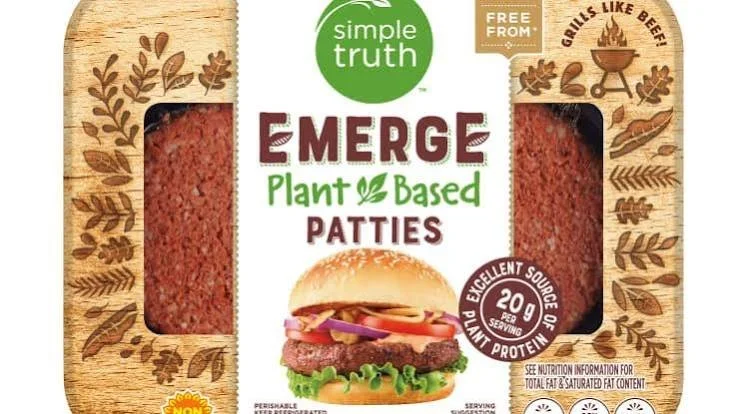
This marketing tactic worked. Expanding the consumer base to include not just vegans, but flexitarians, the vegan curious, or adventurous meat lovers helped brands reach the mainstream demographic, fundamentally shifting how many perceived vegan foods and allowing vegan food brands to achieve premium grocery store shelf space.
When Burger King launched their plant-based Impossible Whopper in 2019, finally achieving a spot in the fast food industry (something previously thought impossible), it seemed like nothing could stop ‘plant-based’ from taking the place of ‘vegan’ entirely.
Plant-based but without the social stigma
‘Plant-based’ also became popular among people who followed a vegan diet but didn’t necessarily want to call themselves ‘vegan.’ The label offered a degree of flexibility: rather than worrying about whether an ingredient contained a trace amount of animal products, they could focus on the broader goal of eating more plants. And rather than taking on the social baggage that had accumulated around veganism, they could simply describe themselves as someone who wanted to eat a healthier, more plant-centered diet, without inviting questions about protein, perfection, or what they did and didn’t eat.
By now, plant-based was practically equal to vegan in many respects. The marketing world had made the transition nearly seamless. A 2020 survey conducted by The Vegan Society showed that 64.1% of respondents believed ‘plant-based’ to mean no animal products, with the minority believing it sometimes meant a product would have trace amounts of meat, milk, or eggs.
This meant that ‘plant-based’ as a term had undergone a radical semantic shift. ‘Plant-based’ no longer meant what T. Colin Campbell had wanted it to mean. It meant something quite different, something that food marketers, vegans, and new plant-based eaters decided it should mean.
And for a while, that new meaning worked. But the landscape was about to change.
Pejoration
In 2019, the same year that Burger King announced their Impossible ‘Plant-Based’ Whopper, Whole Foods’ CEO John Mackey, himself a vegan for several decades, spoke out against plant-based meat brands. His criticism stemmed from the products being ultra-processed, and not necessarily healthier than the meat counterpart.
He had a point. Both Impossible and Beyond Meats used ingredients that were remarkably foreign and chemical-sounding for something that claimed to be made of natural ingredients: methylcellulose, cultured dextrose, soy leghemoglobin. If plant-based burgers were supposed to be made from plants, why is it we can barely understand what half the ingredients are?
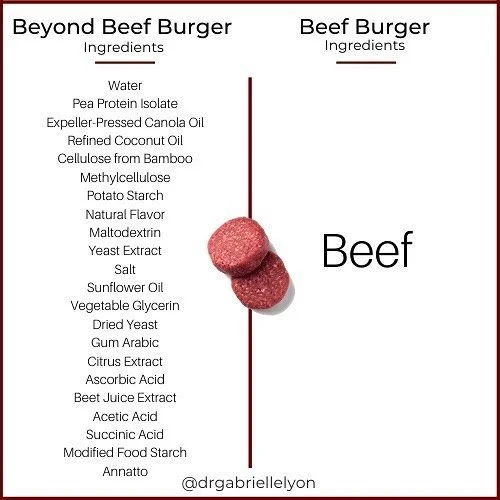
Naturally, this led to increased scrutiny over alternative meats and cheeses, as well as the term ‘plant-based’ itself. The more ultra-processed products that entered the market under the plant-based banner, the more people questioned just what exactly ‘plant-based’ meant. Did it communicate healthfulness at all? Was it indeed fresh and natural? Or was it all a ruse to get people to buy unhealthy, ultraprocessed vegan products?
Linguists refer to this process as pejoration: when a once-positive or neutral term gradually acquires negative associations. Whether or not the products themselves deserved criticism, the phrase ‘plant-based’ increasingly carried unintended meanings, ones that would have lasting consequences for the movement.
After years of rapid growth, the U.S. plant-based food market began to contract. Total retail sales of plant-based foods declined in 2024, with unit sales falling as well. Plant-based meat has experienced an even steeper decline: in 2025, dollar sales fell 10% and unit sales fell 11%.
Of course, the decline cannot be attributed to the usage of ‘plant-based’ alone. Higher prices, concerns about taste and texture, inflation, and competition from conventional meat all played a role. But the timing is telling: the same label that once promised something healthier, fresher, and more progressive had begun to lose much of its persuasive power. ‘Plant-based’ had gone from a marketing advantage to a term that, for some consumers, invited scrutiny.
The End of an Era?
Words rarely fade into the background because they become inaccurate. They die because they stop being useful.
‘Plant-based’ was enormously useful for more than a decade. It allowed millions of people to experiment with eating differently without adopting an identity they weren’t ready for. In doing so, it permanently changed how mainstream consumers think about vegan food.
Ironically, ‘plant-based’ may now be suffering the same fate as ‘vegan’ before it: after years of marketing and increasingly mixed attitudes toward the people who use it, its meaning has become clouded, its usefulness waning.
Perhaps that’s inevitable. Language is always changing. Once a new word is coined, there are no rules saying its meaning has to remain the same the rest of its life. The public determines what it should mean, and how it should be used.
Whether ‘plant-based’ still has a future remains to be seen. Some words simply fade away. Others change meaning yet again. But if there’s anything that its history has taught us thus far, it’s that people are genuinely interested in healthier, plant-focused food. They just didn’t want the label or the social stigma that often came with eating that way.
It’s an important lesson for us all: how we talk about plant-based eaters and dieting matters more than we think. Perhaps the future of plant-based eating doesn’t depend on finding the perfect word for it, but on making the idea so ordinary that we no longer need one.