In the Dark of Winter: the Ancient Origins of the Christmas Cookie
Imagine it: 1,000 AD, Europe. The ground was cold and softly dusted with snow. Nothing grows in this season. Whatever harvest they had is all stored away in their not-so-cozy homes, made to last until spring. Life was harsh, brutal, and full of disease and hardship.
But it wasn’t all grim. The winter solstice, though a period marked by shortened days and long nights, also marked a time of celebration. Being as it was a season of cold and hard earth (conditions that made it difficult or impossible to work in the fields), the winter solstice was a time for feasting, enjoying the fruits of the spring, summer, and fall’s harvest and hard work. They could finally enjoy the alcohol that had been fermenting since spring.
And despite the cold and hardship, the community came together to enjoy food. It was at this time where, in addition to the meat, alcohol, and breads that decorated the table, sweet treats made an appearance.
Recently, I’ve been thinking a lot about this solstice feast, what it would’ve meant back then. To do so means to think entirely differently about food, its availability and the absolute wonder that would’ve been something sweet. And as we enter the season of non-stop cookie baking, I can’t help but marvel at the history of the humble, but beloved Christmas cookie, a product of this celebrated season, one that’s survived and morphed over the ages.
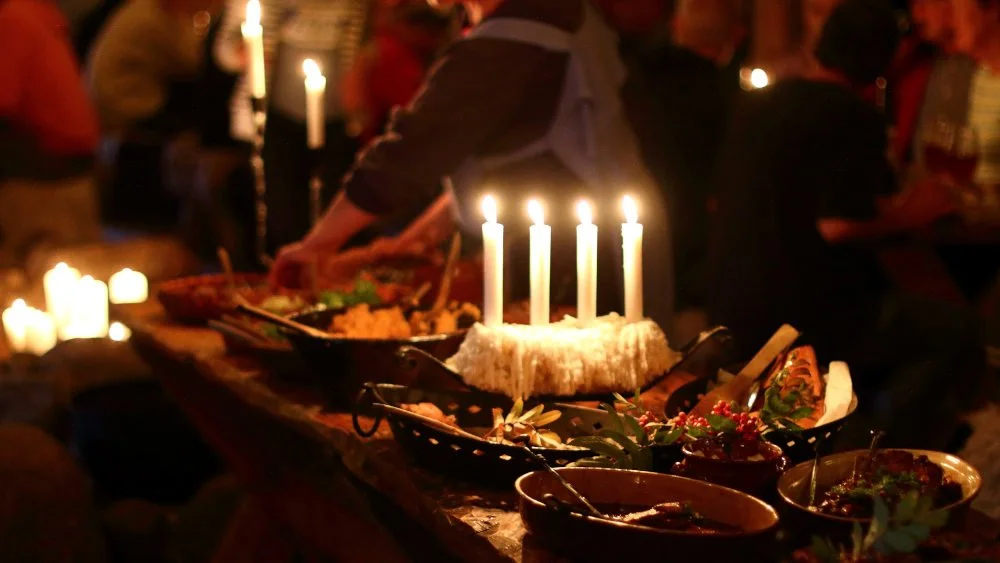
The making of something sweet
Christmas didn’t mean anything at the turn of the millennium. The solstice celebration fully revolved around food and the changing of the seasons. Despite the hardships that promised to come, the table was still set, the winter season still honored, and people enjoyed the food on the table, knowing that the days would eventually become brighter.
The treats on the table would’ve looked vastly different from ours. Today, so much of what we eat is loaded with sugar (even things that shouldn’t be). It’s hard to imagine a time when sugar was scarce, used only on special occasions, and even then only minimally. The refined sugar we think of wasn’t yet available, molasses being the closest thing, and honey maybe (if they lived in the right area for it). What made solstice goodies so delectable however wasn’t the sugar so much as it was the spices and foods from far away places: nutmeg, cinnamon, cloves, allspice, dried fruits, nuts. It was a celebration of foreign flavors, things they weren’t all that used to having in their diets.
These ingredients weren’t available to all, nor were they used all year round. Baked goods were largely still an expensive party delicacy, something to be made and enjoyed only on important occasions. The winter solstice feast was one such occasion. But the spirit of sharing the wealth hadn’t entirely disappeared in medieval Europe, and though the wealthy had fuller tables, smaller treats like that of a small cookie were easy to share among neighbors, rich or poor.
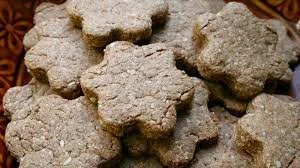
It wasn’t until the later Middle Ages when the solstice feast became instead a celebration of Christ’s birth, though this didn’t necessarily change how the time of year was celebrated. Feasts still took place, goodies were still brought to the table. As times changed however, so did the amount and variety of other ingredients. Trade routes were in full throttle, which allowed sweets and goodies to become more prominent at the table. The later arrival of cane sugar especially from the New World made baked goods easier to prepare and share with others.
Various versions of what we’d call the Christmas cookie came about in different regions of Europe. In Germany for instance, Lebkuchen (still a popular Weihnachten cookie today) were made in monasteries, becoming the model for future gingerbreads. In Sweden, pepparkakor (essentially a ginger snap) also became popular. Other versions sprouted elsewhere, and by the 17th century, Europeans had all sorts of small, cookie-like desserts. And hence, the Christmas cookie was born and with it the potential for something wondrous.
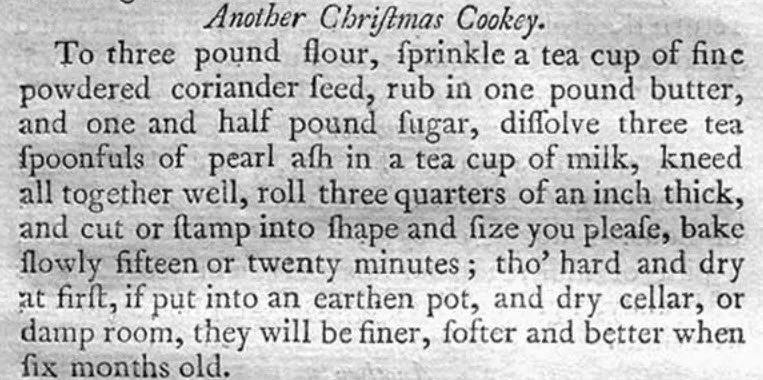
A recipe from a 1796 American cookbook
Christmas Cookies in the New World
Most thankfully for us the Christmas cookie made its way to America, by way of the early Dutch settlers in the 17th century. The word ‘cookie’ actually stems from the Dutch ‘koeptje’. But the version that arrived was still very much like the Lebkuchen or another spice-infused dessert: full of cinnamon, cloves, nutmeg, or dried fruits.
In the centuries since, this cookie would morph into a thousand other varieties, taking on the same flavors as the old, traditional, solstice-meal style goodies while others were reflections of a new time, new ingredients, and new ways of thinking. By the Industrial age, sugar and flour were more readily available to Americans, making it easier for regular households to make their own treats. Waves upon waves of immigrants arrived to the American continent, bringing with them their own herbs, spices, and cooking traditions, only adding to the variety.
Nowadays, Christmas cookies can mean almost anything: chocolate fudge brownies, peppermint bark, peanut butter cookies, springerles, konjakksnitter, sugar cookies with sprinkles, gingerbreads, etc.
And while cookies are now something we cook with much more regularity, the Christmas season has always been the season of cookie baking and sharing. Even after all these centuries have passed, the importance of the Christmas cookie hasn’t diminished. Though daily life is almost unrecognizable now compared to that of our ancestors, we still remember to celebrate food and abundance in the time of darkness.
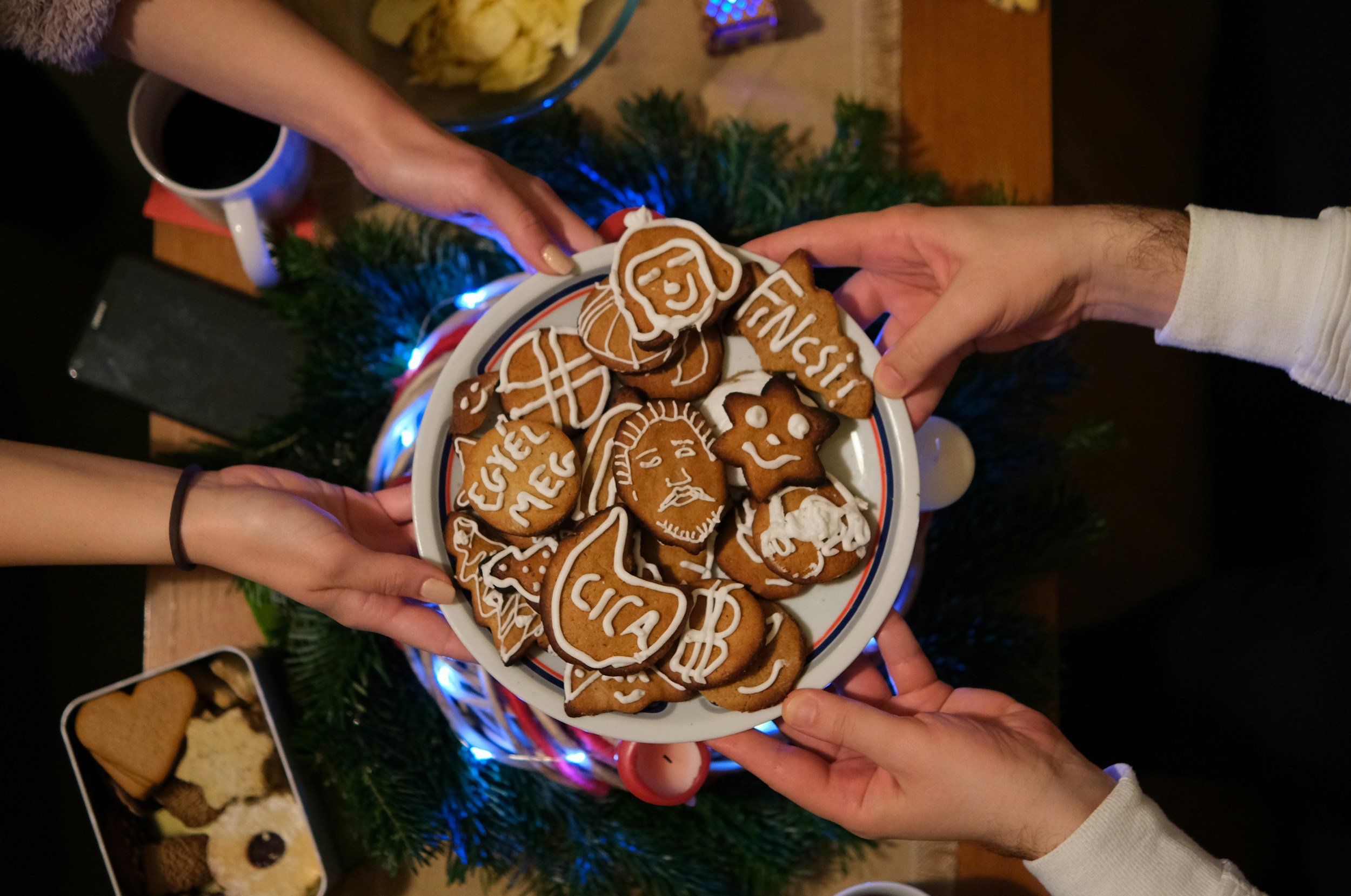
Baking through dark times
These days, there’s darkness in so much of our daily lives. What has been a hard year for many could very easily become even harder in the days and weeks ahead. When the world feels like it’s sometimes off-tilt and going in a very bad direction, it’s hard to know what will actually make things better.
Did our ancestors ever feel this way? Were there moments when they wondered if they’d live to see another summer, be able to remember the loveliness of sun and warmth? In some ways, they had it much harder than us. I try to remind myself of this whenever I shiver in our relatively well-heated house. If they managed to survive, so can we. But the ills of our modern world shouldn’t be ignored. There are aspects of our lifestyles that make this season especially one that’s harder to cope with than others.
And that’s why Christmas cookie baking feels so important this time of year. It’s a treat during a dark and difficult time. It’s that touch of sweetness that, for the few seconds you’re eating it, make us remember that life isn’t all doom and gloom.
Seeing the wealth of Christmas cookies in my parents’ kitchen growing up, or at a holiday party, I remember just how truly lucky we all are. There’s something beautiful and remarkable about the variety and abundance of our Christmas cookies today. It’s a season built around the very idea of abundance, overeating, and sharing. And despite the economic hardships many of us face, we still have a wealth of foods to share and enjoy.
This year especially, it feels particularly important to bake cookies, not just for my friends and family, but for all of us who have struggled this year, knowing more struggle is to come, and that we can face it together. In doing so, we’re contributing to one of the most beloved of human traditions.